


Elizabeth Bathory: The Blood Countess
Updated: Mar 27
The 16th century noblewoman who killed hundreds of girls.

According to legend, in 16th century Hungary hundreds of young girls fell victim to a vampire noblewoman: Countess Elizabeth (or Erzsébet) Báthory de Ecsed – aka the Blood Countess. Unlike nowadays, back then it was easy for people to believe in the existence of vampires, witches and other supernatural phenomena. So it comes as no surprise that the simple-minded local populace, powered by their fevered imaginations, had spread various rumours that painted her as some evil, supernatural entity. Even now, over 400 years later, the stories of her exploits live on.

For the majority of people who know of Elizabeth Bathory today, the limited information they have is the stuff of myths, legends and invented tales of her life, which label her a vampire, a witch, a werewolf or a serial killer who’d bathe in the blood of her victims to retain her youth and beauty. Most modern historians agree that the stories about her cruelty and sadistic tendencies were fabricated by those of her contemporaries who were intimidated by her wealth, power and influence. Even so, these are the stories that are most interesting and enduring. One thing is certain: Elizbeth was a unique woman quite ahead of her time.
EARLY LIFE & MARRIAGE

One of four siblings, Elizabeth was born in the Kingdom of Hungary some time in 1560 to the old and highly distinguished noble family of Báthory, who owned vast lands and property in the kingdom, and had a lineage that included royals, cardinals, knights and judges. Around 14 years old, Elizabeth was married to Ferenc Nádasdy, the son of another influential noble family. During their marriage, Elizabeth had proven herself to be a powerful, intelligent and capable woman with the traits of an early feminist. Her war hero husband had mostly been away fighting the Ottoman Turks, sometimes for years at a time, leaving her to take charge and manage their vast wealth and estates, which she did as well as any man.
Before we delve into the stories about Elizabeth's exploits, it's important to address a certain detail of the Báthory genealogy. The family had been inbreeding for centuries, marrying with their own kin to keep their bloodline pure and family traits unaltered. Historically speaking, inbreeding within the aristocracy wasn't an uncommon practice in Europe, even though it often gave rise to genetic disorders, especially those of the mind. As a result, the Báthory family were reputedly plagued with various mental illnesses, and Elizabeth is believed to have been affected by them since childhood as she was prone to seizures and fits of rage.
THE LEGEND BEGINS
If Elizabeth's contemporaries are to be believed, her fascination with human blood and cruelty began after she moved into Nádasdy Castle. One evening, a servant girl was combing her hair when she accidentally pulled on it, and although the countess didn’t react then and there, she later stung the girl with a needle, and licked the wound when it bled. Then again, there are other sources that indicate Elizabeth's fascination with cruelty began earlier, in childhood. She allegedly tormented the girls who served her, and enjoyed watching servants and peasants being physically punished. Other Báthory family members, including her aunt Klara, are said to have introduced Elizabeth to practises like witchcraft and Satanism.
At Nádasdy Castle, the countess was reportedly ruthless in the punishment of her servants, subjecting them to various torture-killings. There were witnesses who claimed that she was doing the same deeds in several of her other estates. For example, on one occasion, a bunch of students who’d been visiting one of her castles in Keresztúr (modern-day Slovakia) were asked to help bury a group of dead girls. They were told the girls had died of a violent illness, even though the bodies had clearly been butchered.
Although she’d started with piercing or biting her servants, Elizabeth later used a range of techniques and devices that were common forms of punishment in the 16th century, and some even say she had a torture chamber. One such punishment involved tying a naked victim to a pole and covering them in honey, and then leaving them exposed to be swarmed by bees and other insects. Another punishment involved taking her naked victims outside in the freezing cold and having water poured on them until they froze to death.
Other methods of torture included burning and branding her victims, sewing their lips shut, butchering their body parts, biting chunks of flesh off their faces and breasts, using scissors to cut off their hands, noses and genitals, setting fire to paper wedged between their toes, and slicing open the skin between their fingers. It’s unclear whether Elizabeth's husband knew of her cruelty, as he was mostly away at war.

Elizabeth believed that blood was a source of power. Over time, her interest in witchcraft, Satanism and blood grew, consuming much of her attention and time, and this growth also intensified her sadistic tendencies. Her servant, Darvulia, was heavily involved with witchcraft, providing Elizabeth with potions that would allow her to indulge in supernatural experiences. These potions would trigger the hallucinations that put Elizabeth in touch with the monster within.
The majority of Erzsébet’s victims were procured outside the castle by persons designated for that specific job. According to her household staff, as well as various locals, Elizabeth's victims were initially only peasant girls – the teenage daughters of villagers – who were kidnapped or lured to Nádasdy Castle under the ruse of being employed by the countess. Their parents were easier to appease with money, and anyone who asked about their daughter was told that she was working in the countess’s service or had died of an illness.
However, eventually Elizabeth grew unsatisfied, and began selecting girls among the local nobility. This may have started after her husband’s death in 1604, as she became more careless then, especially in covering up her crimes. On one occasion, Elizabeth asked one of the launderers to remove the flooring of the room to bury a group of dead girls. Apparently, the launderer left them under a bed instead, and the smell of rotting bodies soon spread through the castle. The bodies were ultimately taken to a field and buried. The same launderer would frequently be the one directing the clean-up of the scene after another episode of Elizabeth’s murderous frenzies.
Targeting girls from noble families was a mistake as they had the resources to investigate what happened to their daughter, unlike the poor peasantry. This carelessness set in motion the chain of events leading to Elizabeth’s arrest.
INVESTIGATION & TRIAL
By 1610, rumours of Elizabeth’s evil practices and barbarity — which had surrounded Nádasdy Castle for years – were now swirling around the kingdom, prompting authorities to take action (albeit belated). The king of Hungary, Matthias Corvinus II, gave the task of investigating the case to György Thurzó, the Hungarian Palatine (a position similar to that of prime minister). Thurzó also happened to be a family friend to the Báthory’s through Elizabeth’s late husband. Thurzó ordered the widespread collection of evidence, and by Decembr 1610, he had hundreds of signed testimonies made by locals against the countess. She was arrested on 30th December 1610, along with four of her servants who were accused of being her accomplices. The men who went to arrest them claimed to have found a dead girl in the castle, and another one close to death in the cellars.
The trial began next month, although Elizabeth was never present. Between January and May 1611, over two hundred new testimonies came from more witnesses in other communities, which strengthened the claims of others. One witness, a magistrate, accused Elizabeth of shoving hot iron bars into girls’ genitals, and this claim was strengthened by another man, an administrator of one of Elizabeth’s castles, who further added that she would also whip the girls. Elsewhere, a village priest claimed that he saw several girls at Elizabeth’s properties who were sporting all sorts of injuries, while another man confessed to obtaining a large amount of antimony for her, which could be used to poison many people.
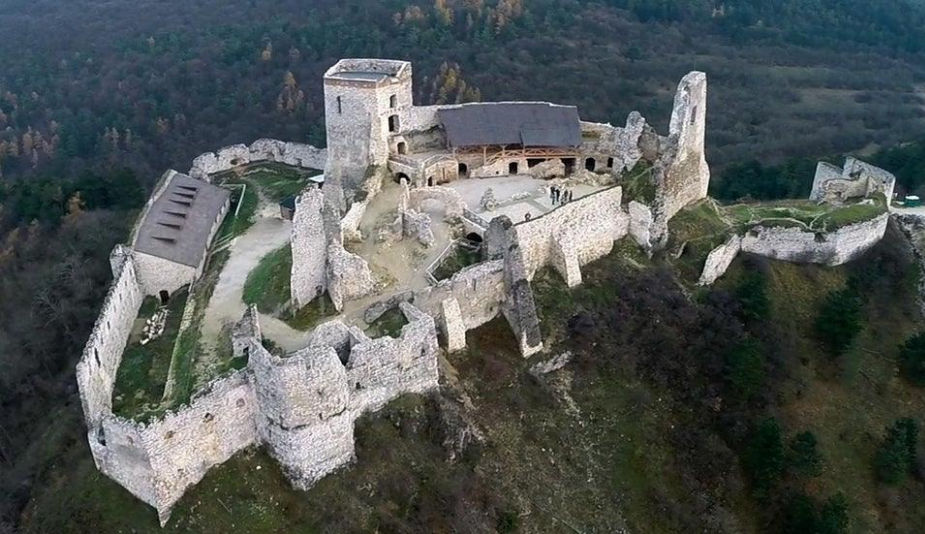
The general consensus is that Elizabeth was responsible for the death of 600 – 650 girls. Of the four servants that were arrested with her, three were executed. King Matthias II wanted the countess executed too, but due to her high status as a Báthory, she was never even tried. She was confined to Csejte Castle until her death around three years later in August 1614, aged 54.
ELIZABETH: THE REAL VICTIM?
As mentioned before, most historians believe that Elizabeth’s story went very differently, and that she’d essentially been set up by the men of her time, with the accusations against her greatly exaggerated if not fully fabricated. King Matthias II wanted Elizabeth executed, though it wasn’t because of the accusations against her. There appears to be three reasons for this; firstly, Elizabeth was a powerful woman, confident and outspoken, with a family wealth that even rivalled the king’s, and this intimidated him; secondly, the king owed Elizabeth’s late husband a lot of money, which she repeatedly demanded but he didn’t want to pay; thirdly, by having Elizabeth criminally executed, the king would lawfully be able to seize her vast lands and properties for himself. We know Europe, including Hungary, was in turmoil, having been the battleground for endless wars for decades. War has always been expensive, so the addition of Elizabeth's wealth and lands (which were strategically important) would have been advantageous to the king.
Another point to consider is the contents of Elizabeth’s surviving letters. Rather than confirming the horror stories surrounding her, they indicate that she was a woman, stuck in a time of complicated, volatile politics, trying her best to run the family businesses and estates, as well as care for her people.
As is the case with much of history, we’ll never know the complete, accurate version of events. Still though, the legend of the Blood Countess certainly makes an interesting story.


Comments